
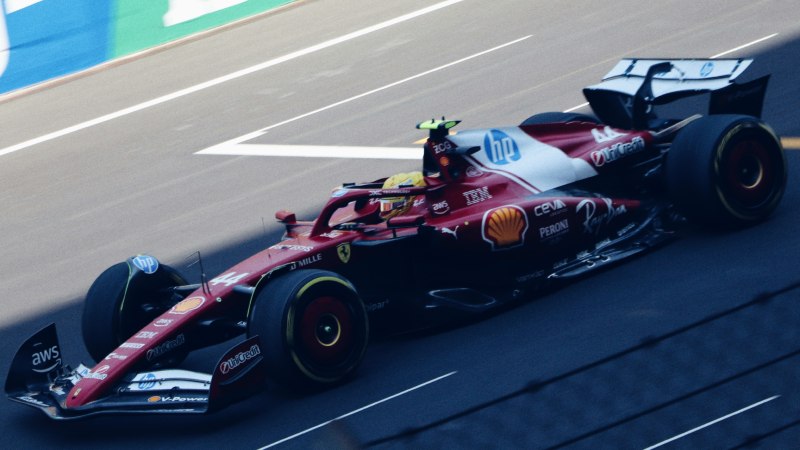
A first Formula 1 Grand Prix is easier to understand when you stop thinking of Sunday as the entire event. Practice, qualifying and the race reveal different sides of the cars and drivers, while the circuit determines whether spectators see heavy braking, flat-out speed or rapid technical sequences from their seats.
Choosing Your First Grand Prix
A first-time visitor may start with a free weekend, a destination or simply the wish to see Formula 1 live. Someone still comparing different kinds of events can browse Fanatix, where the main page covers Formula 1 alongside concerts and other sports before leading into individual event listings. Once F1 is the priority, the next useful question is what kind of racing you actually want to watch.
Monza offers a completely different trackside impression from Monaco, even though both host the same championship. One is dominated by enormous speeds and braking zones, while the other places cars between close barriers on narrow city streets.
What Happens on Friday?
At a standard Grand Prix, Friday gives teams two practice sessions to work on setup, tyres and longer race runs. For spectators who enjoy watching drivers find the limit, those sessions can reveal details that disappear once qualifying begins.
Lap times also become more meaningful as the session develops. Cars may run different fuel loads or tyre compounds, so the fastest driver on Friday is only one part of the story.
What Qualifying Changes
Saturday qualifying is much easier to read from the grandstand because every driver eventually has the same basic objective: produce the fastest possible lap. Traffic, tyre preparation and tiny mistakes suddenly have immediate consequences.
Certain corners become especially interesting during qualifying. A fast bend shows commitment, while a chicane can expose how aggressively drivers attack kerbs when a fraction of a second matters.
How to Read a Circuit
The highest top speed does not automatically create the fastest overall lap or the most overtaking. Motor Sport Magazine’s comparison of Formula 1’s fastest circuits illustrates the difference clearly: Monza produced a 164.3 mph average qualifying speed in 2025, while cars exceeded 220 mph on its straights. Six circuits in the comparison had average qualifying speeds above 150 mph. For a spectator, individual track features usually tell more than a single speed figure:
- Long straights show acceleration, slipstreaming and the build-up to a braking move.
- Heavy braking zones give drivers more opportunity to attack another car into a corner.
- Chicanes make changes of direction and kerb use easy to see.
- Fast corners show aerodynamic grip and driver commitment.
- Technical sections reward precision across several connected turns rather than one dramatic moment.
A seat near Turn 1 may therefore produce more visible racecraft than one beside the fastest point of the circuit. Before choosing a grandstand, it helps to look at what happens on that part of the lap rather than focusing only on the headline speed.
What Changes on a Sprint Weekend?
Sprint weekends compress the schedule and bring competitive running forward. Instead of a normal Friday dominated by practice, spectators get qualifying for Saturday’s Sprint, followed by the Sprint itself before Grand Prix qualifying.
Formula 1 currently has six Sprint events, but the format is set to expand. Reuters reported in August that CEO Stefano Domenicali expects more Sprint races in 2027, while saying the format has helped increase Friday attendance and overall race-weekend crowds.
That makes Friday a very different proposition for a spectator. Anyone who wants competitive sessions on all three days may prefer a Sprint event, while a standard weekend gives more time to watch teams gradually build toward qualifying.
Choosing the Right Ticket
Once the race and weekend format are settled, decide how much of that schedule you want to see in person. The F1 tickets section lists upcoming Formula 1 events with race dates, venues and available ticket options, allowing a fan to move from a chosen Grand Prix to the relevant listing. The length of the visit can then follow the sessions that matter most to you.
A Sunday ticket keeps the focus on the Grand Prix, while a full weekend adds practice, qualifying and sometimes a Sprint. At the circuit, watch braking points, corner entry and changing gaps between cars, not just the leader, to get more from the live race.