
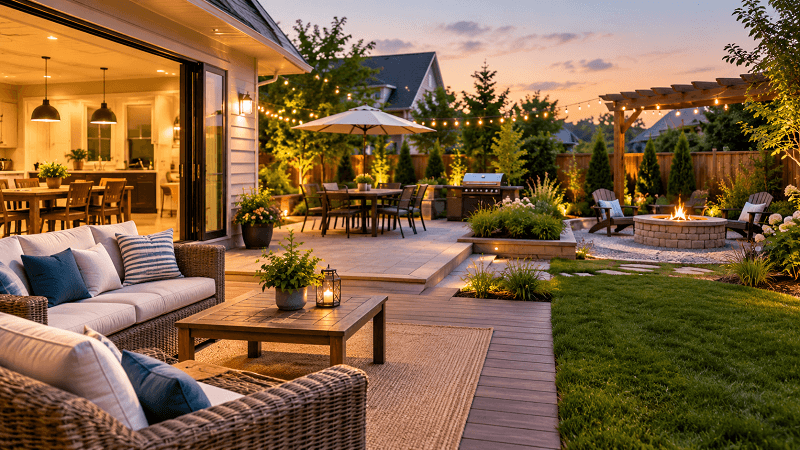
1. Home Life Is Moving Outside
For a long time, the backyard was treated as something separate from the home. It was where children played, the lawn was maintained, and maybe a barbecue appeared during summer.
That is changing.
More homeowners are treating outdoor areas as places where they can eat, relax, entertain, and spend ordinary evenings. As a result, the transition between the house and backyard has become much more important.
For some homes, that starts with creating a defined surface for furniture and everyday activities. Working with a Columbus deck builder, for example, can be part of turning previously unused outdoor space into an area that feels connected to the rest of the home.
The backyard does not necessarily need more features. It needs a reason for people to actually use it.
2. Outdoor Spaces Are Being Designed Like Rooms
One interesting change in backyard design is how similar it has become to interior design.
Instead of placing a table somewhere outside and calling it finished, homeowners are creating different areas for different activities.
A backyard might include:
- A dining area close to the house
- Comfortable seating for conversation
- A shaded place for hot afternoons
- Open space for children or pets
- A quieter corner for reading or relaxing
These areas do not need walls to feel separate. Furniture placement, rugs, planters, lighting, and changes in surface materials can create the feeling of individual “rooms” outside.
3. The Connection to the House Matters
An outdoor space is much more likely to be used when reaching it feels effortless.
If people have to carry food through several rooms, walk down awkward steps, or move furniture every time they want to sit outside, the backyard can quickly become a place reserved for special occasions.
Good indoor-outdoor flow removes some of that effort.
A conveniently positioned deck or patio can extend the kitchen, dining room, or living room outdoors. During pleasant weather, opening the door can effectively make the usable living area feel larger.
Visual details can strengthen that connection too. Similar colors, materials, furniture styles, or architectural details can help the exterior feel like a continuation of the home rather than a completely separate environment.
4. Comfort Determines How Often a Space Gets Used
A beautiful backyard can still sit empty if it is uncomfortable.
Sun exposure is one of the biggest factors. An area that feels perfect in the morning may become too hot to use later in the afternoon.
Shade can come from trees, umbrellas, pergolas, covered sections, or other structures. The right solution depends on the property and when the space is normally used.
5. Lighting Extends the Day
Without lighting, even a well-designed backyard can become difficult to use once the sun goes down.
Outdoor lighting does not need to make the yard as bright as an indoor room. In many cases, softer lighting creates a better atmosphere.
Different lights can serve different purposes. Steps and pathways need enough visibility for safe movement, while seating and dining areas can use warmer, more relaxed illumination.
Lighting around landscaping can also add depth to the backyard after dark.
Planning it early is useful, especially when electrical connections need to be incorporated into a larger outdoor project.
6. Furniture Has to Match the Spac
Outdoor furniture can quickly overwhelm a smaller area.
A large dining table may look appealing online, but if chairs cannot be pulled out comfortably or people have difficulty walking around it, the space will feel crowded.
Measure before buying.
Think about how many people regularly use the backyard rather than planning only for the largest gathering you might host once a year.
Flexible furniture can be especially useful. Smaller tables, movable chairs, benches, and modular seating allow the same outdoor area to adapt to different situations without permanently filling every available corner.
7. The Best Backyards Work on Ordinary Days
It is easy to design an outdoor area around parties and summer gatherings, but most days are not special occasions.
A useful backyard should also work when one person wants to drink coffee outside, when the family eats a quick dinner outdoors, or when someone simply wants a comfortable place to sit after work.
That is why practical details matter as much as impressive features.
8. Think Beyond the First Summer
Outdoor spaces change along with the households using them.
Children grow, furniture gets replaced, entertaining habits change, and homeowners may eventually want features they did not need when the space was first created.
Leaving some flexibility can make those changes easier.
A backyard does not need to be filled completely from the beginning. Open areas can later become additional seating, landscaping, storage, or something entirely different.
9. The Backyard Has Become Part of the Home
The idea of the backyard as leftover space is gradually disappearing.
For many households, it has become another place to gather, eat, relax, and spend time together. In that sense, it is beginning to perform many of the same functions as a traditional living room.
The difference is that it comes with fresh air, changing seasons, and a much closer connection to the outdoors.

